Wound edges and
peri-wound skin
It’s important for healthcare professionals to understand which wound they are dealing with because it changes how they treat and manage the wound.
Wounds can be broadly categorized into two types: acute and chronic1. However, not only the wound itself should get attention – also the wound surrounding skin and wound edges are crucial2-4. Skin conditions like hyperkeratosis must be treated properly5.
Types of wounds
What is the different of a acute and chronic wound?
In general, a wound is defined as a loss of the barrier between the body and the environment due to thedestruction of tissue on external or internal body surfaces1.
C H R O N I C W O U N D S
Is it not healed after 8 weeks, then it is called a chronic wound. Some wounds must be considered aschronic from their very beginning since their care requires the treatment of their underlying cause e.g. diabetic foot ulcer, wounds in periphal artery disease (PAD), venous leg ulcers or pressure sores¹.
A C U T E W O U N D S
Each wound that is not chronic is a considered to be acute¹.
Peri-wound skin and wound edge
Peri-wound
The peri-wound area has been defined as the area of skin extending to 4 cm beyond the wound3.
Peri-wound damage is a risk factor for delayed wound healing and may increase the risk of wound infection4.
Wound edge
Although not diagnostic, examination of the edge of the wound may help to identify its aetiology in the context of the history of the wound.
There are different wound edge characteristics of ulcer e.g. the edged of a venous ulcer are sloping and for arterial ulcer it is punched out2.
Skin condition – Hyperkeratosis
IDENTIFYING
HYPERKERATOSIS
Red and dry with brown or grey scaly patches that could cover only isolated areas or the entire limb surface. Could appear as deepened plaques and flaky skin5.
IMPACT ON
PATIENT
Patients might be embarrassed by their skin appearance. Unpleasant odour might be caused by bacteria collonisation5.
TREATMENT
Once hyperkeratosis is present it is important to keep the skin as clean and free from bacteria as possible. Therefore, debridement is an important part of the treatment5.
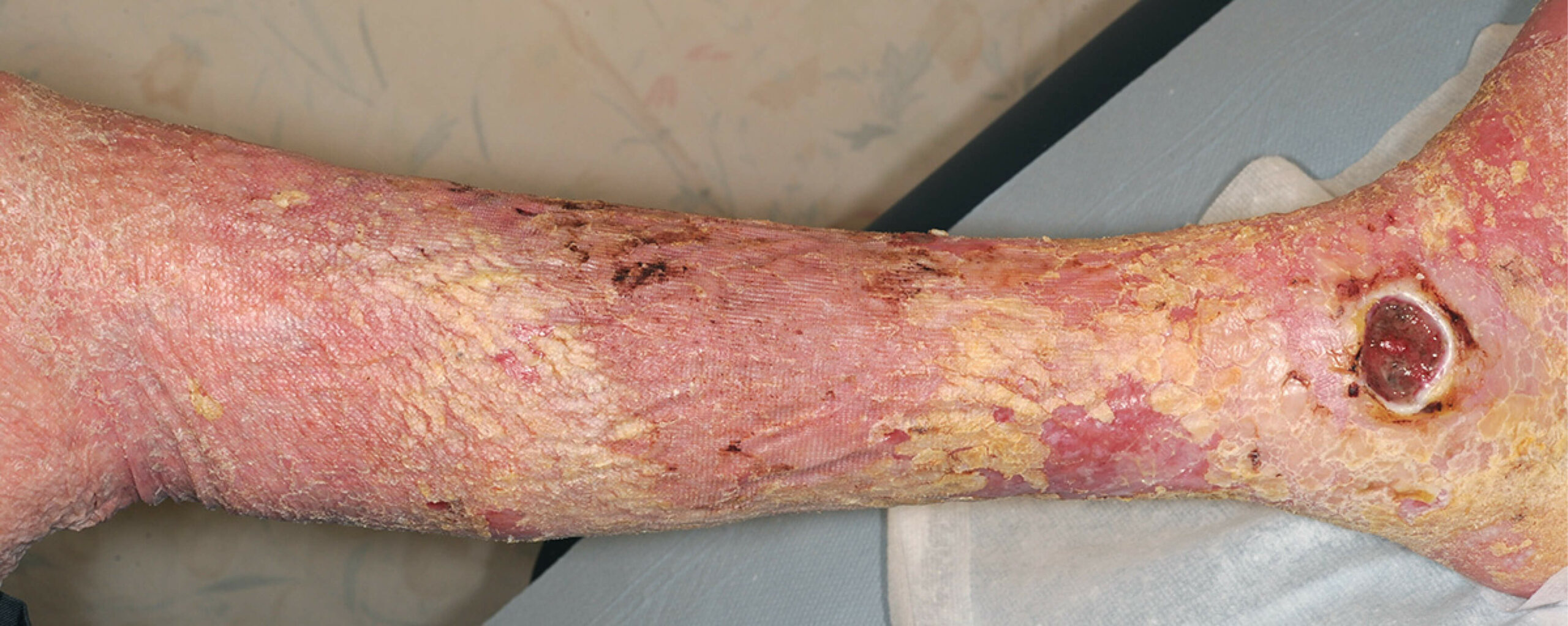
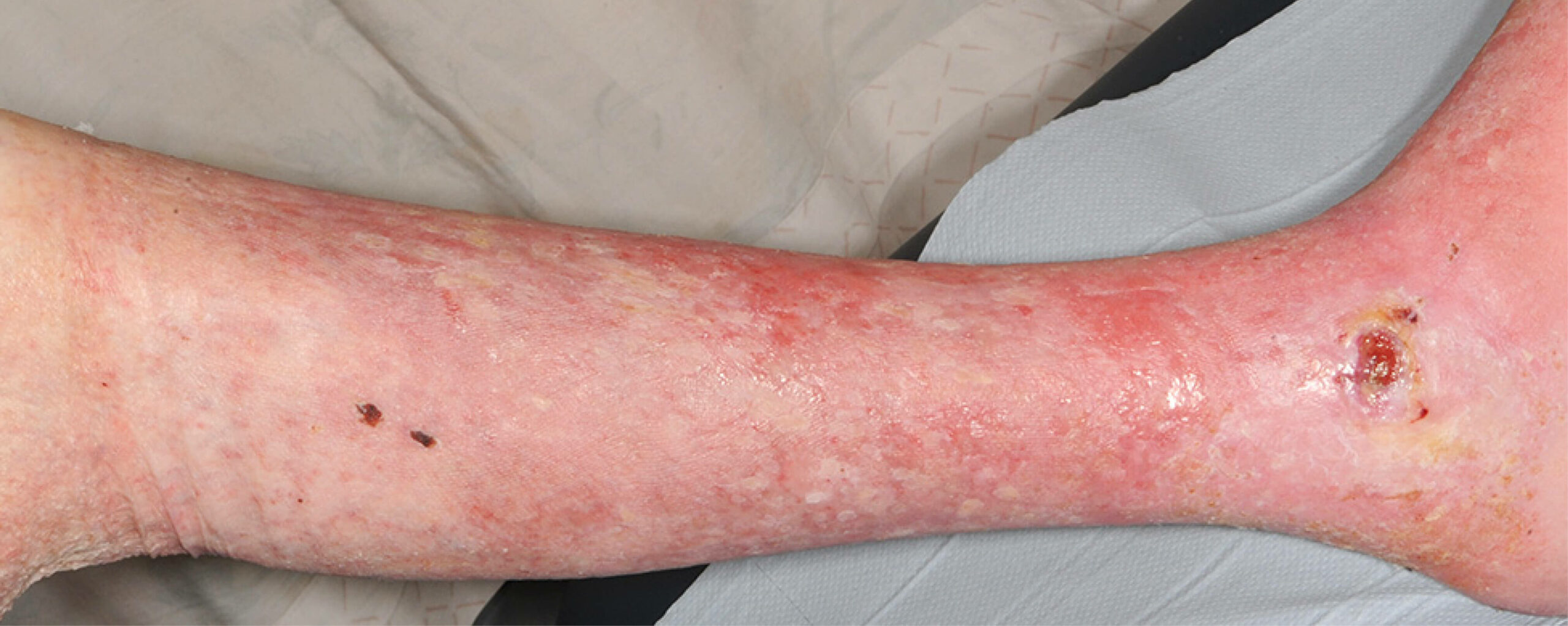
before – after
How can we help?
Are you interested in advanced solutions for wound care? Our team of experts is here to provide you with comprehensive knowledge and personalized advice. Whether it’s about choosing the right products or learning about the latest techniques in wound treatment, we are here for you.
Do not hesitate to get in touch:
References
- Dissemond, J. and Kröger, K. (2021) Chronic Wounds: Diagnostics – Therapy – Health Care: Urban & Fischer.
- Grey, J.E., Enoch, S. and Harding, K.G. (2006) ‘Wound assessment’, BMJ (Clinical Research Ed.), 332(7536), pp. 285–288. doi: 10.1136/bmj.332.7536.285
- Thayer, D.M., Rozenboom, B. and Baranoski, S. (2015) ‘“Top-down” skin injuries: Prevention and management of moisture-associated skin damage, medical adhesive-related skin injury (MARSI) and skin tears’, in Doughty, D.B. and McNichol, L.L. (eds.) Wound Management. (Wound, Ostomy and Continence Nurses Society® Core Curriculum). Philadelphia, PA: Wolters Kluwer Health, p. 283.
- LeBlanc, K. et al. (2021) ‘Best practice recommendations for prevention and management of periwound skin complications’, Wounds International
- ‘Management of hyperkeratosis of the lower limb: Consensus recommendations’ (2015), Wounds UK, 11(4).