Biofilm
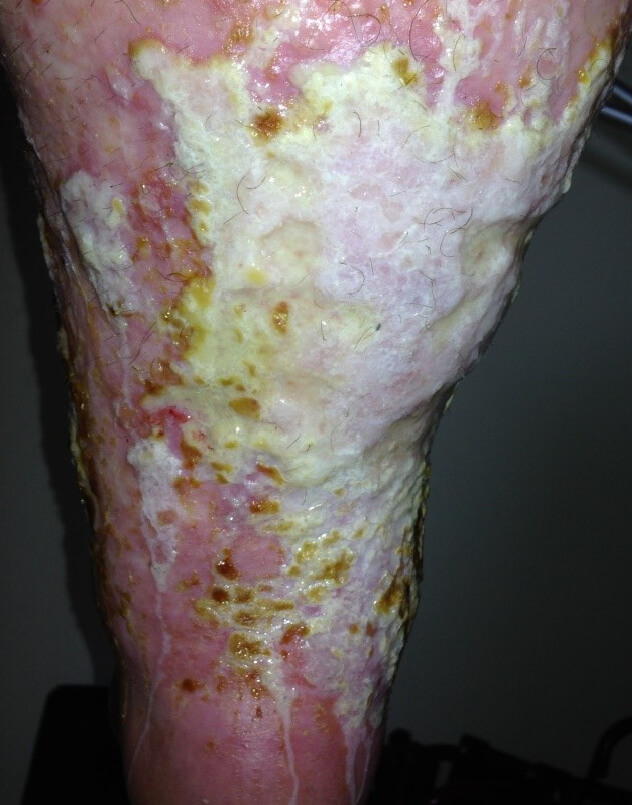
The presence of biofilms is assumed to be linked to non-healing wounds1. Biofilms are aggregates of bacteria embedded within the wound. It is not visible to the naked eye without supporting tools like ultraviolet light2.
The changed microenvironment in the wound can lead to bacterial tolerance towards antibiotics and antimicrobial agents3. Therefore, it is crucial to understand how to deal with biofilm in wounds.
Why should we be concerned about biofilm?
Photos used with
patient’s kind consent
- Biofilm = aggregate of bacteria often embedded within the wound3
- It is viable, bacteria-derived tissue different to slough which is devitalized tissue4
- It is not visible to the naked eye without supporting tools like ultraviolet light2
- Studies have shown biofilm is present in over 78% of chronic wounds5
- Biofilm is most active on wound edges and peri-wound skin6
- Debridement is one strategy to support the immune system in combating biofilm related infection7
- Debridement means removal of bioburden from the wound and especially wound edges and peri-wound skin6
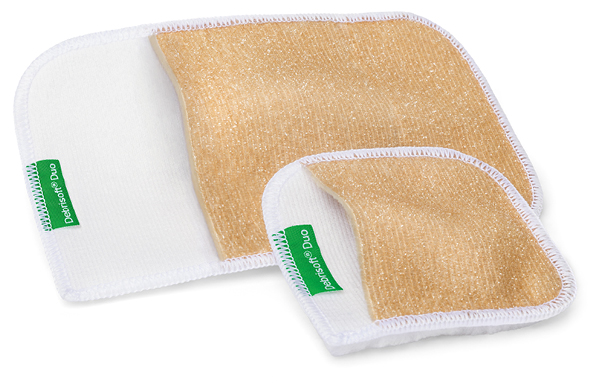
Debrisoft was able to significantly reduce biofilm cells independent of the organism in an in-vitro trial8
How do we know a biofilm is present?
Delay…
…in healing9
Little response…
…to appropriate therapy9
Signs…
…of local infection9
Change…
…in amount of exudate9
Poor quality…
…granulation tissue9
Increased pain…
…at wound site9
Existence…
…of a continuous, slimy, milky-transparent film on the wound, which cannot simply be wiped off 9
Reducing the bioburden in a wound with the least amount of damage to local healthy tissue, can tip the balance in favour of healing.8
Pro-active biofilm treatment9
Resistance of biofilm to topical or systemic antimicrobial agents requires a proactive approach to treatment
- Repeatedly physically disrupts and removes biofilm – through vigorous/active cleansing or debridement
- Reduces reformation of biofilm – through the use of antimicrobial dressings or topical antiseptic preparations9
Removes barriers to healing not visible to the eye
Before
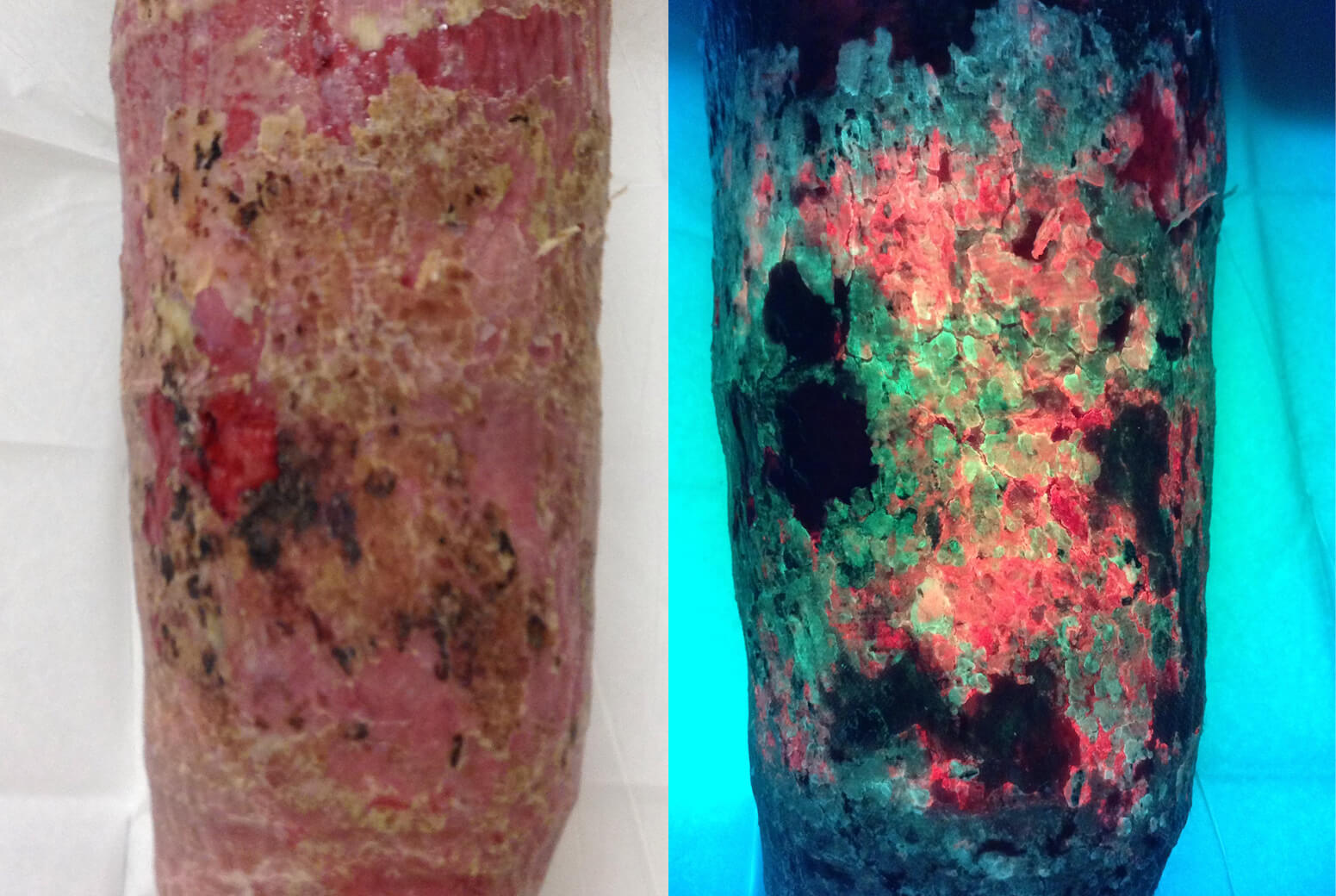
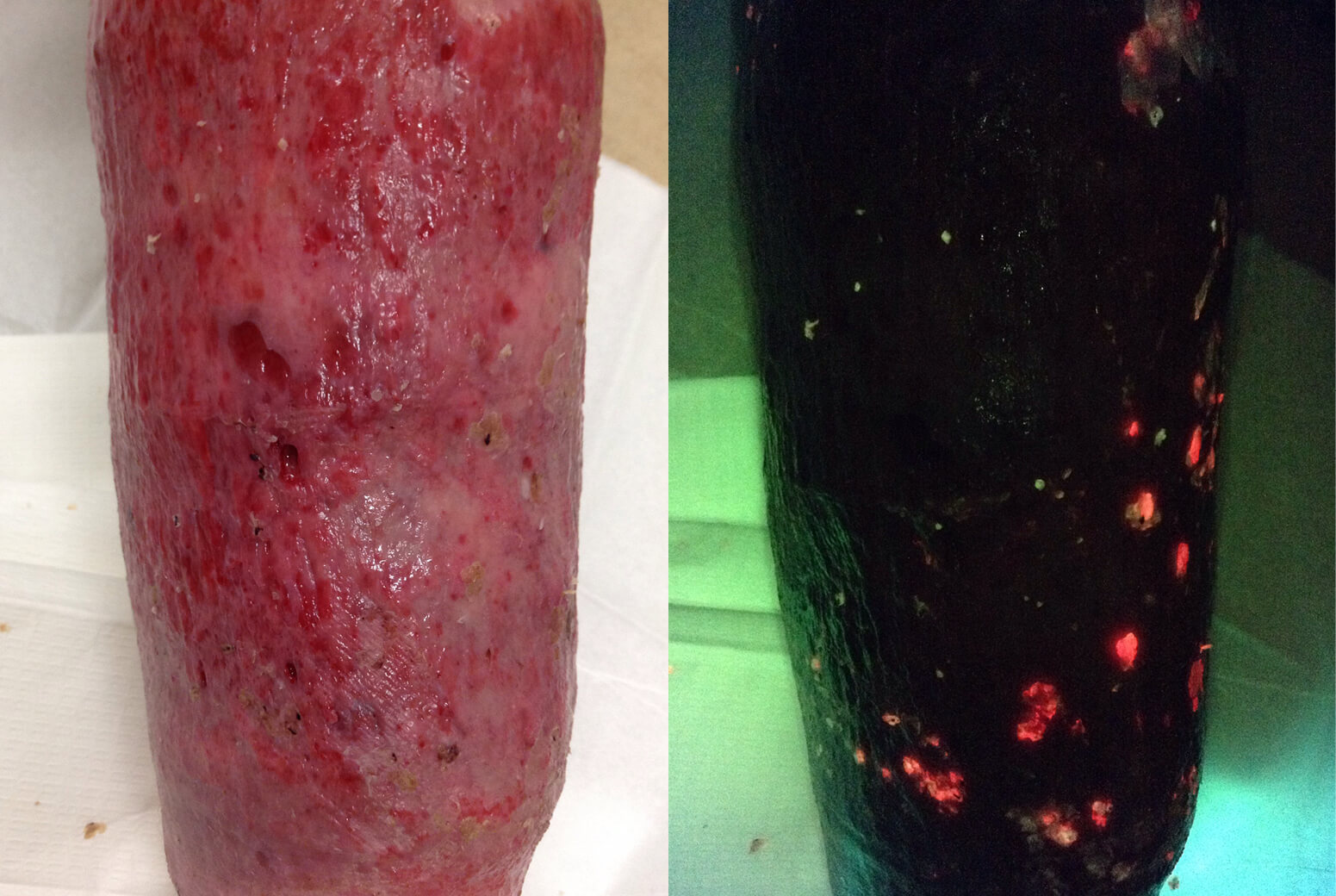
By using a MolecuLight® camera Biofilm can be made visible. On the left picture we see a wound coated with debris and slough, but we cannot tell whether there is biofilm. On the right hand side we see the biofilm through ultraviolet light. It appear green and red7.
After
After one debridement session, the green areas could be removed. Which means biofilm has been reduced7.
After a second debridement session, most of the biofilm has been removed together with the debris and slough7.
How can we help?
Are you interested in advanced solutions for wound care? Our team of experts is here to provide you with comprehensive knowledge and personalized advice. Whether it’s about choosing the right products or learning about the latest techniques in wound treatment, we are here for you.
Do not hesitate to get in touch:
References
- Thaarup, I.C. and Bjarnsholt, T. (2021) ‘Current In Vitro Biofilm-Infected Chronic Wound Models for Developing New Treatment Possibilities’, Advances in Wound Care, 10(2), pp. 91–102. doi: 10.1089/wound.2020.1176
- Mayer, D.O. et al. (2024) ‘Best practice for wound debridement’, Journal of Wound Care, 33(Sup6b), S1-S32. doi: 10.12968/jowc.2024.33.Sup6b.S1
- Bjarnsholt, T. et al. (2022) ‘The importance of understanding the infectious microenvironment’, The Lancet. Infectious Diseases, 22(3), e88-e92. doi: 10.1016/S1473-3099(21)00122-5
- Metcalf, D.G. and Bowler, P.G. (2013) ‘Biofilm delays wound healing: A review of the evidence’, Burns & Trauma, 1(1), pp. 5–12. doi: 10.4103/2321-3868.113329
- Malone, M. et al. (2017) ‘The prevalence of biofilms in chronic wounds: a systematic review and meta-analysis of published data’, Journal of Wound Care, 26(1), pp. 20–25. doi: 10.12968/jowc.2017.26.1.20
- Murphy, C. et al. (2020) ‘Defying hard-to-heal wounds with an early antibiofilm intervention strategy: wound hygiene’, Journal of Wound Care, 29(Sup3b), S1-S26. doi: 10.12968/jowc.2020.29.Sup3b.S1
- Morris, C. and Timmons, J. (2018) Evaluating the removal of bacteria and biofilm with monofilament fibre debridement technology, compared to a cleaning product using a wound intelligence device [Poster], EWMA 2018. 9 May.
- Liepins, B. et al. (2023) ‘How clean is clean? In-vitro comparison of biofilm removal efficacy and cleaning characteristics of three debridement pads [Preprint]’. doi: 10.1101/2023.04.19.537160
- Wounds UK (2017) ‘Best Practice Statement: Making day-to-day management of biofilm simple’,Wounds UK.
- Percival, S.L. et al. (2015) ‘Biofilms and Wounds: An Identification Algorithm and Potential Treatment Options’, Advances in Wound Care, 4(7), pp. 389–397. doi: 10.1089/wound.2014.0574